Money Suckers
A fee for a paper bill, and a fee for not paying the way they prefer
Charging for the ordinary way of doing something is a discount on the preferred way, described in reverse.

This is written to be used rather than admired. Each section below is a decision about payment method charges, and each one has a default.
Before you start
- A surcharge and a discount are arithmetically identical and psychologically different.
- Card surcharge rules vary substantially between countries.
- Digital-only billing shifts record-keeping onto the customer.
Framing is the entire product
Charging extra for a paper bill and offering a discount for paperless billing produce identical totals and very different responses. Losses are weighted more heavily than equivalent gains, which is one of the most reliably replicated findings in decision research.
A surcharge is therefore more effective at changing behaviour than a discount of the same size, and it is also more resented. Sellers choose between the two framings deliberately, and in some jurisdictions the choice is constrained by regulation. Where surcharging is restricted, the identical arrangement reappears as a discount, which is a good illustration of how hard this is to legislate.
Card surcharges and where they are limited
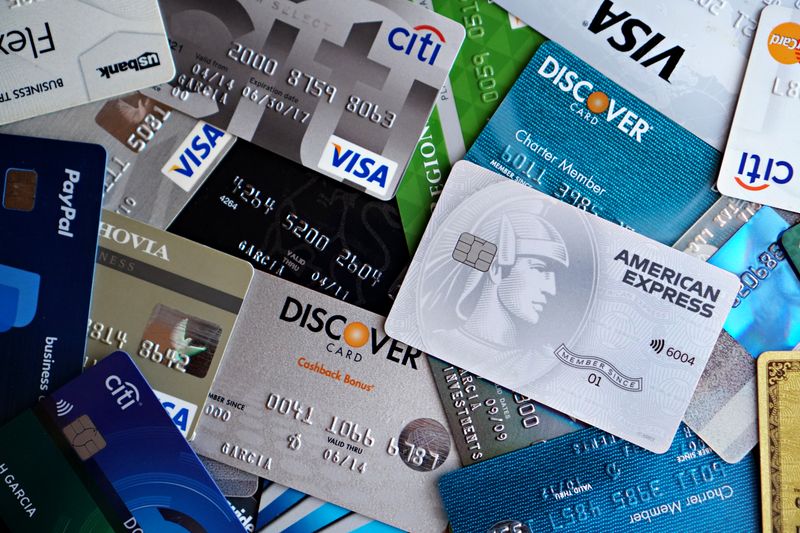
Some jurisdictions ban surcharges on consumer card payments outright, some cap them at the merchant's actual cost, and some permit them freely. Where a cap applies, a flat charge on a small transaction frequently exceeds the true cost, which is the most common form of non-compliance. Minimum spend requirements are a related practice, often permitted by law and prohibited by card scheme rules, which is a genuinely confusing combination.
Once the introductory rate lapses, the cost of accepting a card is real, and small merchants face fixed per-transaction charges that hurt disproportionately on tiny sales. That makes the practice sympathetic in a corner shop and considerably less so on a utility bill.
The paper bill is a genuine cost and a small one
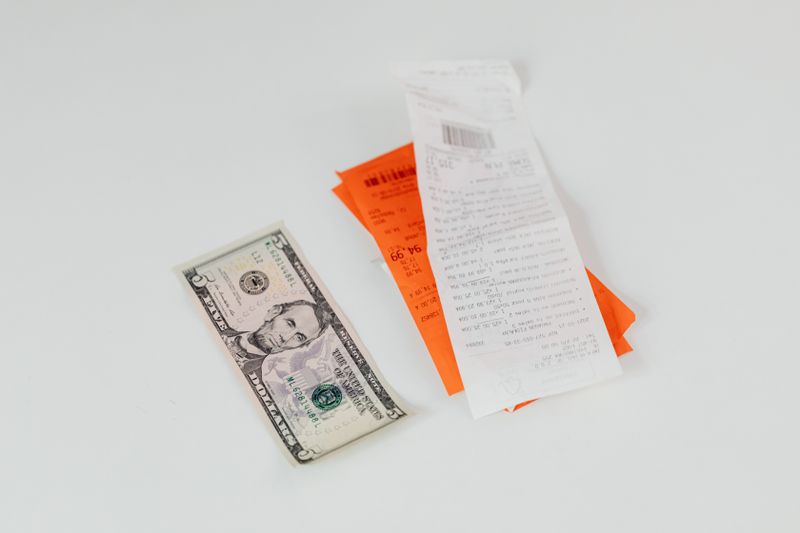
Printing, enveloping and posting a bill costs real money, and a large customer base makes the total substantial. The charge levied is frequently larger than that cost, which converts a cost recovery into a behavioural lever with a margin attached. Consumer groups have argued that access to a paper bill should be free for people without reliable internet access, and some regulators agree.
Once the introductory rate lapses, rules requiring free paper billing for vulnerable customers exist in several markets, and awareness of them is low. Asking whether a free paper option exists for your circumstances is worth doing, because the answer is often yes and never volunteered.
Direct debit discounts and what you give up
Paying by direct debit reduces collection cost and default risk, which genuinely justifies a discount rather than merely a preference. What the customer gives up is control over timing and, in practice, attention, since an automatic payment is one fewer moment of scrutiny.
Estimated direct debits on variable bills can build up credit balances, which is an interest-free loan in the wrong direction. Reviewing the amount against actual usage once or twice a year is enough to catch this, and takes about five minutes.
Direct debit guarantee schemes in some countries provide strong protection against incorrect collection, which is a real and underused right.
Paperless is not the same as having a record
Digital billing shifts record-keeping onto the customer, and access to historical bills is frequently limited to a rolling period. Closing an account often removes access entirely, which is discovered at the worst possible moment, usually during a dispute or a move. Downloading bills annually into your own storage costs a few minutes and preserves evidence that the provider is not obliged to keep for you.
This matters most for utilities, tenancy-related bills and anything that might be needed to prove address history. It is the least interesting advice in this article and the one most likely to save an afternoon later.
If a charge looks wrong, the boring route — written complaint, then the ombudsman or regulator — still works better than a review.
Paying without the extra
Check what payment methods carry a charge before setting up any recurring bill, since the difference compounds monthly. Ask whether a paper bill is available free in your circumstances, particularly for anyone without reliable internet access.
Review estimated direct debits against actual consumption twice a year and request an adjustment where a credit balance has built up. Download and keep your own copies of anything that might be needed as evidence, at least annually. And where a surcharge looks larger than any plausible cost, check the local rules, because in a fair number of countries it is not allowed.
The takeaway
Ask what the paper option costs, and download your own bills once a year.
None of this is an accident. Somebody drew this flow and somebody approved it.
Questions readers ask
Are card surcharges legal?
It depends entirely on the country. Some ban them for consumer cards, some cap them at cost, some permit them. Check your local consumer authority.
Can I insist on a free paper bill?
In several jurisdictions there are protections for customers without reliable internet access or in vulnerable circumstances. It is worth asking explicitly.