Money Suckers
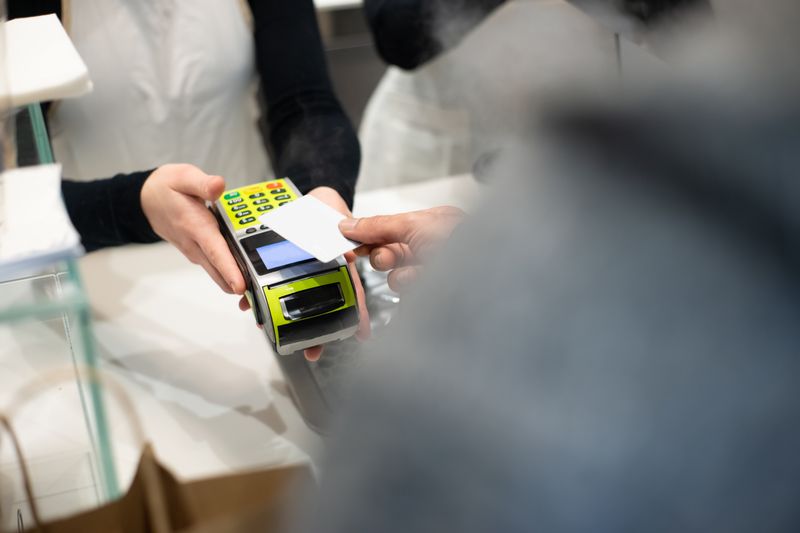
The tip screen has rotated toward you and it is suggesting twenty-five per cent
Payment terminals turned tipping into a public interaction with defaults, and the defaults have quietly climbed.
The options around tipping prompts are set out side by side below, with the conditions that genuinely favour one over the other.
The difference in one place
- Presented default options anchor the amount far more than any custom entry.
- Percentage prompts calculated on the total including tax raise the effective rate.
- Tipping norms vary enormously between countries and cannot be assumed.
Defaults do almost all of the work
A screen showing three percentage buttons and a small custom option is an anchoring device, because the middle button reads as the normal choice. Raising all three options raises the middle one, which shifts the norm without anybody announcing that the norm has shifted. The custom and no-tip routes are usually smaller, greyer or one step further away, which is the same visual hierarchy as a cancel button.
Because the terminal is often rotated toward you by a person standing there, the decision is also made in front of an audience. That combination of a default, a small deviation cost and social observation is about as strong as a nudge gets.
The base the percentage is calculated on matters
A percentage applied to the total including tax and service produces a larger figure than the same percentage applied to the pre-tax subtotal. Where a service charge has already been added, a further percentage prompt is charging a percentage on top of a charge for the same thing. The screen rarely says which base it used, and the difference between the two conventions is meaningful on a large bill.
Checking the printed total against the suggested amounts takes a moment and is the only way to know what is being asked. On a small transaction the percentage can also collide with a minimum, producing suggestions that are large relative to the purchase.
Prompts spread to transactions with no service in them
Terminals now request tips at counters where the interaction consisted of handing over a pre-made item, which is a straightforward extension of the software. The prompt is a setting in a payment system rather than a considered decision about that particular business, and defaults ship enabled. This is widely reported as tipping fatigue, and the observable result is that people tip in more places and think about it less.
It also blurs the line between a discretionary reward and a surcharge, which is bad for everyone including the staff involved. Where a business has simply enabled a default, saying so plainly would cost nothing and almost nobody does.
Who actually receives it
Distribution varies enormously, and card tips may be pooled, split with kitchen staff, subject to an administrative deduction or handled through payroll. Several jurisdictions have legislated on tip distribution, generally requiring that tips reach staff and restricting deductions by the employer.
Where those rules exist, asking how tips are distributed is a reasonable question and one that good employers answer readily. Cash is not automatically better, since it may also be pooled and it may simply be less visible rather than more direct.
The honest summary is that the destination of a tip is frequently unknowable at the counter, which is a poor basis for a decision made in four seconds.
Tipping norms are not universal
In some countries tipping is a substantial part of income and expected as standard, while in others it is uncommon and occasionally awkward. Service charges included by default are the norm in several markets, in which case an additional tip is genuinely optional rather than conventionally expected. Travellers routinely apply the norms of home, which either under-tips people who depend on it or over-tips in places where it is not expected.
Once the introductory rate lapses, checking the local convention before a trip takes a minute and prevents both errors, which are equally uncomfortable in opposite directions. This publication is read internationally, so treat anything you have absorbed about correct tipping as local rather than general.
If a charge looks wrong, the boring route — written complaint, then the ombudsman or regulator — still works better than a review.
Deciding before the screen appears
Choose your percentage before the terminal is handed over, since a decision made in advance is immune to the layout of the buttons. Use the custom option deliberately rather than defensively, because it is there and using it costs only one extra tap.
Somewhere in the release notes, check whether a service charge is already on the bill before adding anything, as double-charging is common and rarely intended by anybody. Tip on the pre-tax subtotal if that is your convention, and be consistent rather than agonising each time. And accept that the screen is designed to make hesitation expensive, which is exactly why deciding early works.
Side by side
| Consideration | What it means in practice |
|---|---|
| Defaults do almost all of the work | Presented default options anchor the amount far more than any custom entry. |
| The base the percentage is calculated on matters | Percentage prompts calculated on the total including tax raise the effective rate. |
| Prompts spread to transactions with no service in them | Tipping norms vary enormously between countries and cannot be assumed. |
The takeaway
Decide the number before the screen turns around.
The fix is usually trivial, which is the most annoying part.
Questions readers ask
Should I tip on the pre-tax or post-tax total?
Conventions differ by country and both are defensible. Deciding once and applying it consistently matters more than which you choose.
Is a service charge the same as a tip?
Not always. Where one is already added, a further tip is additional. Distribution rules for service charges vary by jurisdiction.